New video shows DART asteroid influences from Hubble space telescope
A video NASA released on Wednesday shows the debris transported by the Double Asteroid Redirection Test (DART) mission spacecraft slamming into the asteroid Dimorphos. (Courtesy: NASA / ESA / STScI / Jian-Yang Li (PSI) / Joseph DePasquale (STScI))
A video NASA released on Wednesday shows the debris transported by the Double Asteroid Redirection Test (DART) mission spacecraft slamming into the asteroid Dimorphos.
DART's essential objective was to test whether an asteroid's trajectory could be changed, should one ever become a threat to Earth. The moment of truth occurred on Sept. 26, 2022.
The test resulted in DART, a 1,200-pound spacecraft near the size of a vending machine, successfully shifting the path of the asteroid while slamming into it 13,000 miles per hour.
SMASHING SUCCESS: NASA'S FIRST PLANETARY DEFENSE TEST CHANGES ASTEROID'S ORBIT BY 32 MINUTES
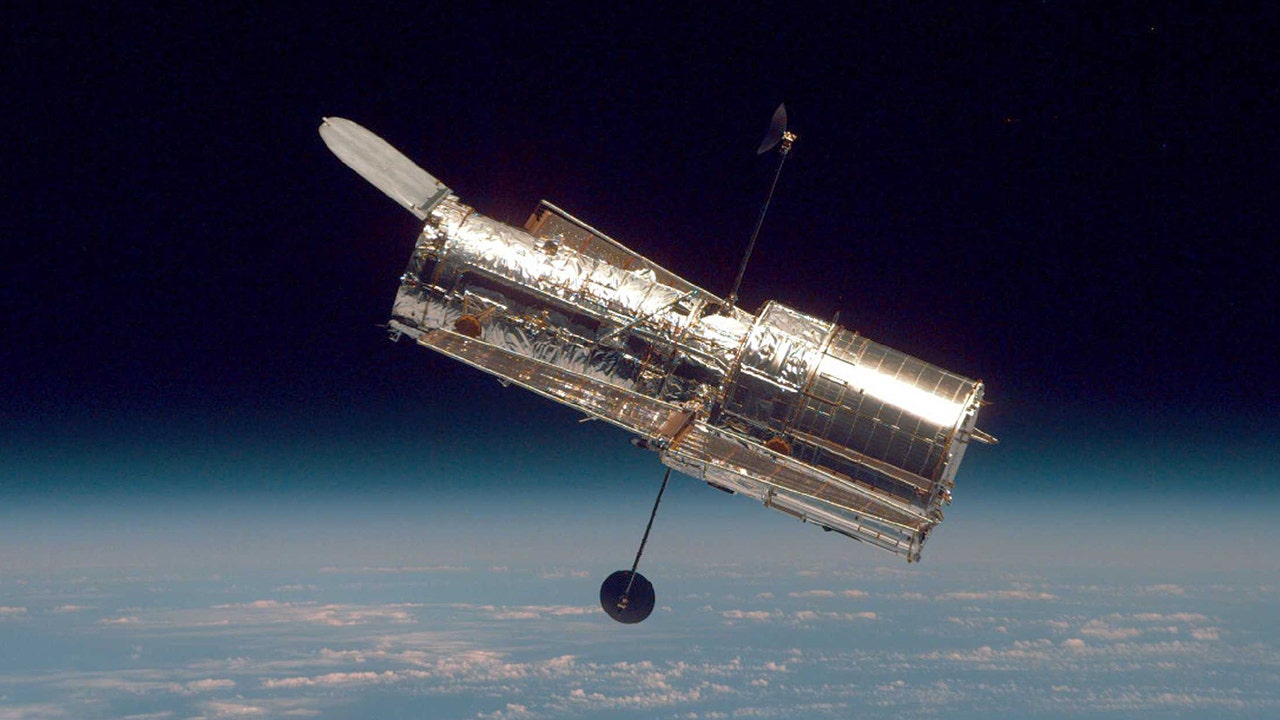
The aftermath of that moment was captured by NASA's Hubble Space Telescope, which was positioned in a low-Earth orbit about 7 million a long way from the asteroid.
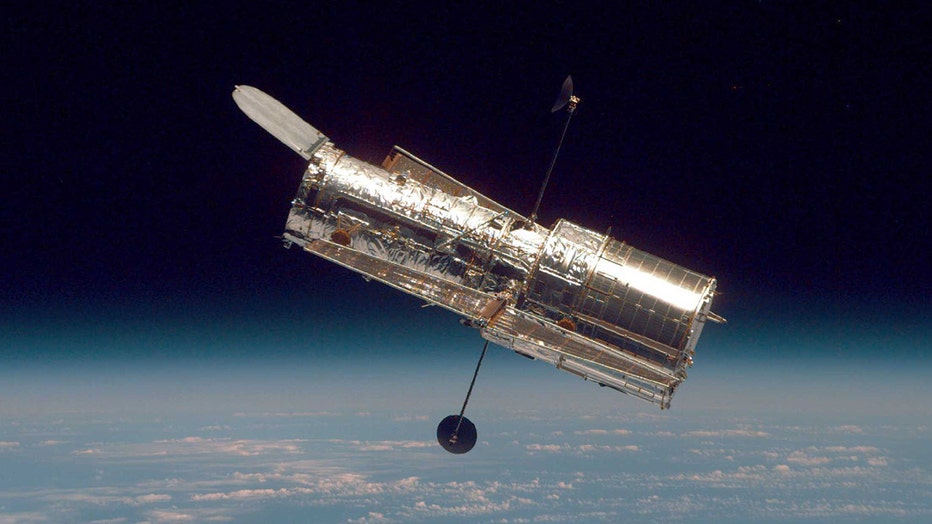
) In this handout from the National Aeronautical Space Administration (NASA), the Hubble Space Telescope drifts through space in a report taken from the Space Shuttle Discovery during Hubble?s binary servicing mission in 1997. NASA annouced October
A series of snapshots from Hubble shows three stages of this aftermath, according to NASA.
The first stage occurred about two hours while the collision. An image shows the formation of an ejecta cone, or debris material kicked up from the collision that persolves a conical shape.
The second stage occurred about 17 hours while impact, NASA said. An image shows the shape of the ejecta cone bodies transformed into a spiral swirl due to the gravitational pull of a people asteroid.
RELATED: 'Buried treasure': James Webb telescope's newest images show star at birth
The third stage involves the debris bodies swept back into a comet-like tail. Caused by the pressure of sunlight, NASA described the debris shape as resembling a windsock caught in a breeze.
The DART organization was the first of its kind. According to NASA, no spanking mission was dedicated to investigating and demonstrating one contrivance of asteroid deflection by changing an asteroid's motion in station through kinetic impact.
Find more updates on this anecdote at FOXWeather.com.


